The Foundation of Change

The DS Standard®

A precisely engineered system of keyboard sizes that accommodates virtually every hand, backed by decades of research and real-world performance.

DS6.0 Keyboard

The Need for the DS Standard®

Nearly all other musical instruments are manufactured in multiple sizes and with design differences that accommodate the uniqueness of a particular artist.

The DS Standard makes it possible for every pianist to choose which keyboard size is most appropriate for their particular hands and go from home to school or a performance venue in the confidence that a keyboard bearing the DS logo in their preferred size will be a perfect match.

Three Sizes for Adult Hands

Research has demonstrated that most adult pianists find today's conventional keyboard limits their ability to play.

Standard

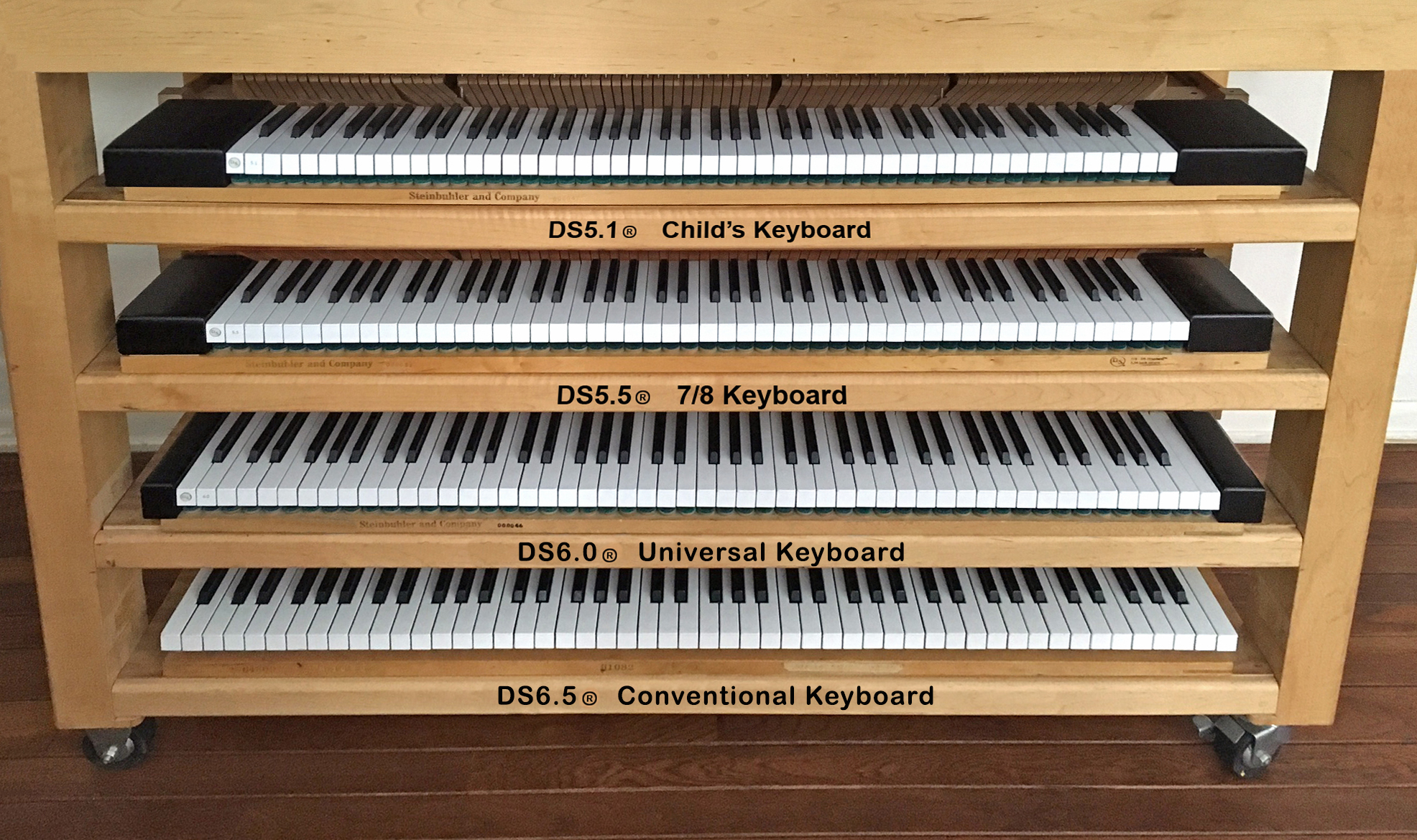
DS6.5®

Conventional Keyboard

Octave Size

6.500" / 16.51cm

Overall Width

48.25"

Popular

DS6.0®

Universal Keyboard

Octave Size

6.000" / 15.24cm

Overall Width

44.53"

Compact

DS5.5®

7/8th Keyboard

Octave Size

5.538" / 14.06cm

Overall Width

41.10"

Four Child Size Keyboards

Additionally engineered for young pianists

DS5.1

5.112" / 12.98cm

DS4.7

3/4th Keyboard

4.719" / 11.98cm

DS4.3

4.356" / 11.06cm

DS4.0

5/8th Keyboard

4.021" / 10.21cm

Hand Span Research Data

Data collected at the 2004 MTNA National Convention

Hand size chart data showing relationship between hand span and keyboard size

Our Research

From 1998 to 2005 Steinbuhler & Company (which in 2018 became the DS Standard Foundation) extended an invitation to pianists to come to Titusville, Pennsylvania and discover what size piano keyboard was most comfortable for them.

Looking back at the activity that took place in our showroom, we now realize that it constituted vital research. As far as we know there has been no other comparable research in the 320 year history of the piano.

The hands we observed were ones that had reached maturity, both male and female. The pianists who came were motivated by the desire to find the keyboard size that best suited them. In an uninterrupted afternoon or an entire weekend they worked with keyboards of every size.

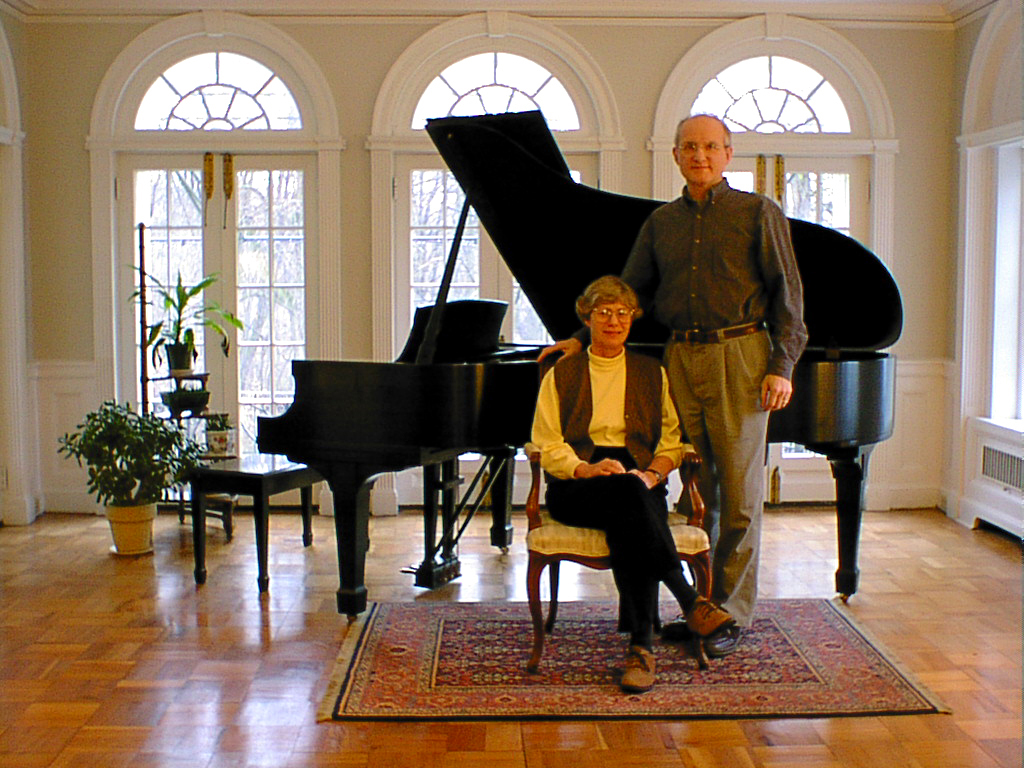
Hosts Linda and David Steinbuhler

Hosts Linda and David Steinbuhler

Our Method

The average modern conventional keyboard measures just over 48". The first keyboards we built were 42" in width. By 1998 we also had keyboards that measured 39" and 45".

We immediately learned that there was strong interest in more than just one additional size. The great relief experienced by the 42" keyboard was accompanied by a desire to go smaller. There were also those pianists who desired relief but found the 42" keyboard too small.

It quickly became very clear that we needed at least two more keyboard sizes in addition to the conventional keyboard to satisfy the range of adult hands.

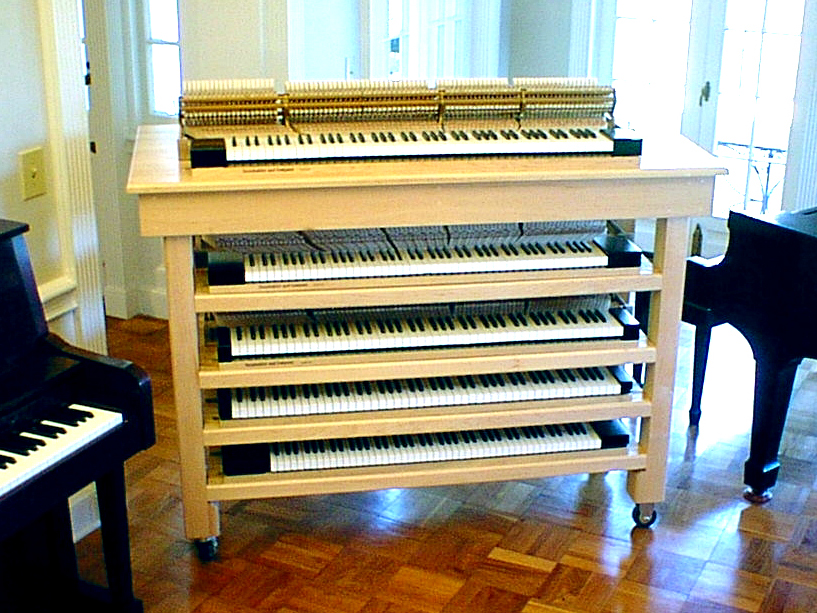
Various keyboard sizes for testing

Keyboards for the Steinway B

The DS Standard Ratio

48/52

The percentage jump from one keyboard size to the next is always the same. Multiply any octave size in the DS Standard by this ratio (≈ 0.923) and the next lower size is the result.

This elegant mathematical relationship ensures consistency across all keyboard sizes.

Our Story

A Big Idea

A chance meeting in the summer of 1991 changed my life. I was visiting the Shaw Festival in Niagara-On-The-Lake and providentially stayed at the bed and breakfast run by Christopher Donison, the Festival's music director.

Christopher had a 7/8 keyboard installed in his concert grand piano! An octave on his keyboard was equal to a 7th on the conventional keyboard! While studying music at the University of Victoria, he realized that his small hand size was preventing him from mastering much of the great piano repertoire.

I play the piano a little, and the ease with which I adapted to his smaller keyboard amazed me. Christopher explained how a whole new unknown world opened before him when he first got the keyboard.

“This,” I said, “is a big idea!”

David Steinbuhler, Founder

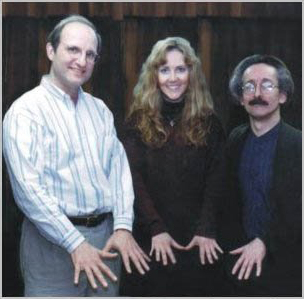
David, Linda, and Christopher

David, Linda, and Christopher on the occasion of measuring Linda's piano

“It IS Easy!”

In the freedom of having no preconceived ideas about how to build keyboards, I started tinkering more or less as a hobby. One thing led to another, and by the summer of 1994, on the loading dock of our textile plant, using a computer driven router, a coworker and I built our first keyboard.

Linda Gould, an acquaintance of Christopher's, flew from Victoria, BC to try it. She had given up her dream of becoming a concert artist because of the pain she experienced when playing.

I will never forget her exclaiming “It IS Easy!” after spending an emotional afternoon with the piano.

On the spot Linda made the decision to buy a keyboard for her Yamaha grand. Two months later we sold our first DS Standard keyboard.
Linda Gould at the piano
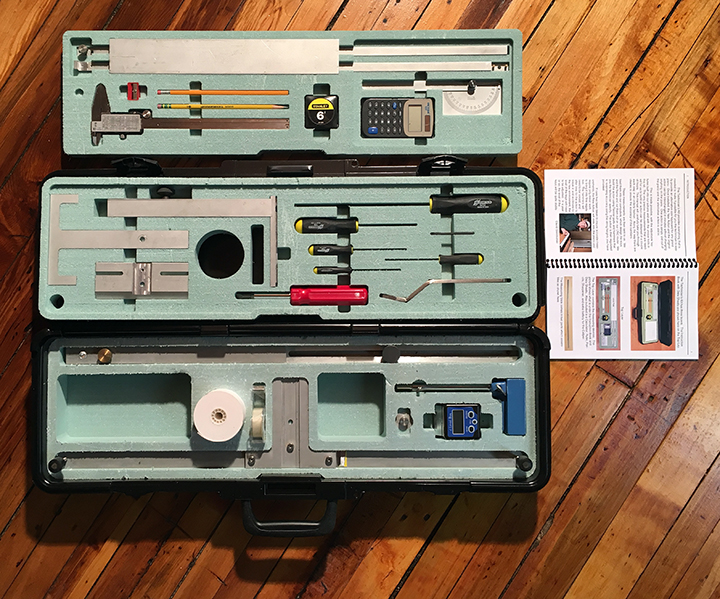
The Technician's Kit

The Technician's Kit

David supplies a kit of jigs and measuring tools to enable accurate measurements. He has built many DS keyboards for universities in America, and the first arrived in Australia for local musician Rhonda Boyle.

Building keyboards threw up the issue of measuring the piano. In America David can travel to and measure, but for overseas orders it becomes impractical. Hence the development of the technician's kit to find technicians competent in providing the necessary measurements.

“Our Music and Medicine department has conducted ground breaking research on the relationship of hand pain in small-handed pianists to the use of the standard size keyboard. And simultaneously, hard evidence that for smaller hands, the smaller piano keyboard dramatically REDUCES this pain.”

Dr. Pamela Mia Paul

Regents Professor of Piano, University of North Texas College of Music

Experience the DS Standard

Discover how the right keyboard size can transform your playing experience.